
formula of cement in chemical with diagram manufacturer Grasping strong production capability, advanced research strength and excellent service, Shanghai formula of cement in chemical with diagram supplier create the value and bring values to all of customers.
 WhatsApp)
The phase diagram for this system is shown in Figure 1, and an expanded view of the lime-rich part of the system, which is of interest in cement manufacture, is presented in Figure 2. The binary phase relations between CaO and SiO 2 give rise to the compounds C 3 S and C 2 S.
To use the Concrete Volume Calculator, simply enter the width, length, and thickness of your pour, click on whether you are measuring the thickness in feet or inches, then click on the Calculate button.The calculator will estimate the number of cubic yards of concrete that will be required.
03 MPa, and then kept there for 3 hours. The change in length of the specimen (after gradually bringing the autoclave to room temperature and pressure) is measured and expressed in percentage. The requirement for good quality cement is a maximum of 0. 80% autoclave expansion. Standard autoclave test: AASHTO T 107 and ASTM C 151: Autoclave Expansion of Portland Cement. Consistency of .
Proportioning of the raw materials is based on a series of simultaneous calculations that take into consideration the chemical composition of the raw materials and the type of cement to be produced: American Society for Testing and Materials (ASTM) Type I, II, III, or V white cement, or American Petroleum Institute (API) Class A, C, G, or H.
1203 Spring Creek Place, Springville, UT 84663 USA | 801.489.5663
Mar 29, 2010· Create Chemistry Equations and Diagrams in Word. Matthew Guay @maguay March 29, ... You can convert any chemical name, such as benzene, or formula, such as H 2 O, into a chemical diagram, standard name, or formula. Whether you're a professional chemist, just taking chemistry in school, or simply curious about the makeup of Citric Acid, this ...
Jul 15, 2014· Here is a formula for mixing a really good and strong concrete that is as simple to mix as 1, 2, 3. Here's the list of ingredients that you'll need: cement, sand and rock. And here's where the 1,2,3 comes in: use one-part cement, two-parts sand and three-parts rock.
Composition of cement. Introduction Portland cement gets its strength from chemical reactions between the cement and water. The process is known as hydration.This is a complex process that is best understood by first understanding the chemical composition of cement.
Portland cement is the most common type of cement in general use around the world as a basic ingredient of concrete, mortar, stucco, and non-specialty grout.It was developed from other types of hydraulic lime in England in the late 19th century by Joseph Aspdin, and usually originates from limestone.It is a fine powder, produced by heating limestone and clay minerals in a kiln to form clinker ...
Cement In the most general sense of the word, a cement is a binder, a substance that sets and hardens independently, and can bind other materials together. Cement used in construction is characterized as hydraulic or non-hydraulic. Hydraulic cements (e.g., Portland cement) harden because of hydration, chemical reactions

Cement starts to set when mixed with water which causes a series of hydration chemical reactions. The constituents slowly hydrate and the mineral hydrates solidify; the interlocking of
formula of cement in chemical with diagram,Clinker and nonhydrated Portland cement The four compounds referred as C 3 S C 2 S C 3 A and C 4 AF are known as the main crystalline phases of Portland cement The phase composition of a particular cement can be quantified through a complex set of calculation known as the Bogue formula
Jul 26, 2017· Composition of cement Introduction Portland cement gets its strength from chemical reactions between the cement and water. The process is known as hydration. This is a complex process that is best understood by first understanding the chemical com...
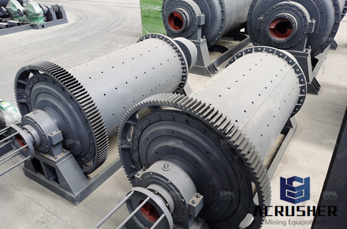
SPCC Plan - Calculation Guidance The following example compares two different design criteria: one based on the volume of the tank and one based on precipitation. Scenario: A 20,000-gallon horizontal tank is placed within an engineered secondary containment structure, such as a concrete dike. The tank is 35 feet long by 10 feet in diameter.
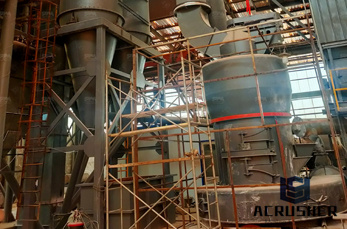
Concrete Cubic Yards formula. The concrete cubic yards formula is a formula of volume, and as such requires three dimensions: length, width, and depth. This formula can be used for many applications, such as pouring a foundation or a driveway. Follow the steps below to .
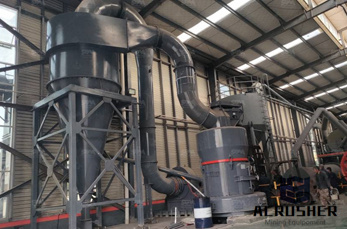
An increase in clinker AR (also sometimes written as A/F) means there will be proportionally more aluminate and less ferrite in the clinker. In ordinary Portland cement clinker, the AR is usually between 1 and 4. The above three parameters are those most commonly used.
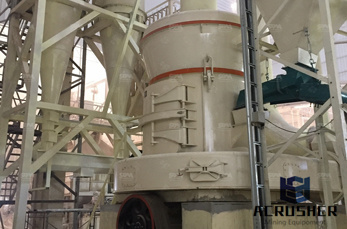
formula of cement in chemical with diagram; Ashford Formula, By Curecrete | Concrete Floor Treatments. Concrete Floor Surface Protection The Ashford Formula, manufactured by Curecrete Chemical, Inc, was the first product to protect and seal concrete through the process of chemical densificationUnlike coatings or membranes that simply lie on top ...
These tables list the chemical compatibility chart of various elastomer materials commonly used for o-ring. This data has been compiled from literature published by various material suppliers. It is given as background information only. In any given case, factors such as .
Aug 30, 2012· The remaining cement is shipped in bulk quantities by mean of trucks, rails or ships. Cement Manufacturing Process Flow Chart. After explaining the complete process of cement making, flow chart would be like that. flow chart present the summary of whole process as shown below.
A bed of cement is prepared in special permeability cell and have exact porosity e = 0,500 weight a quantity of cement. The weight of the cement is calculated from where ρ is the density of the cement [g.cm-3] V volume of the cement bed [cm 3] Specific surface .
The formula for concrete mix is one part cement, two parts sand and three parts gravel or crushed stone. If hand mixing, it's inadvisable to exceed a water to cement ratio of 0.55, which translates to 55 pounds of water for every 100 pounds of cement. When mixing concrete, it's necessary to ensure that there is an adequate amount of aggregate.
The structural formula of a chemical compound is a graphic representation of the molecular structure (determined by structural chemistry methods), showing how the atoms are possibly arranged in the real three-dimensional space. The chemical bonding within .
Concrete is not as likely to rot, corrode, or decay as other building materials. Concrete has the ability to be molded or cast into almost any desired shape. Building of the molds and casting can occur on the work-site which reduces costs. Concrete is a non-combustible material which makes it fire-safe and able withstand high temperatures.
The Original Concrete Densifier. The Ashford Formula was the first product to densify concrete through the process of chemical densification. Unlike film-forming treatments that wear off, the Ashford Formula penetrates and reacts with concrete to produce a denser, harder, more stable surface.
WhatsApp)
 Online Chat
 Sales Hotline